
The Team
Grid engineers and signal scientists
Three people with deep roots in power systems, relay protection, and signal processing. We built Magnefy because we had spent years in the field watching the same preventable failures play out.

Grace Chen
CEO, Co-founder
Background in distribution system reliability and transformer asset management, with operational experience across municipal utilities. Focused on translating physical fault mechanisms into actionable maintenance forecasts that operations teams can actually use.
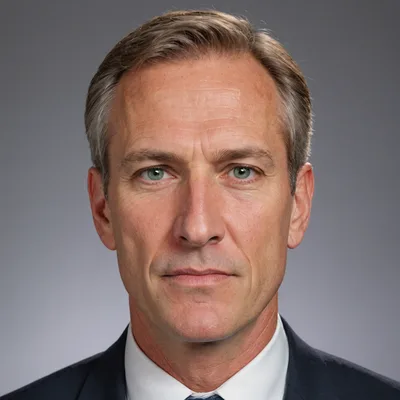
Marcus Webb
CTO, Co-founder
Relay protection and substation automation engineer. Designed the EM signature acquisition hardware and the digital signal processing pipeline that extracts harmonic content from transformer output. His background in current waveform measurement and protection relay engineering informed the sensor architecture Magnefy uses in the field.

Nadia Osei
Head of Data Science
Signal processing and anomaly detection background with domain focus on time-series classification in industrial equipment monitoring. Responsible for the fault signature library and the models that classify EM anomaly patterns against known fault precursor signatures from the field.
Background
What each person brought to Magnefy
Grace Chen
CEO, Co-founder
Grace spent years in distribution operations, primarily managing transformer maintenance programs for utilities in the mid-Atlantic and Midwest. The consistent pattern she observed: utilities doing annual oil analysis, receiving results showing elevated dissolved gases or degraded insulation values, then scheduling inspections for six months later. By inspection time, a meaningful fraction of the "watch list" assets had already tripped or were deteriorating faster than the schedule allowed. The data existed. The problem was that conventional monitoring could not see the fault forming in real time. Grace started Magnefy to address that specific gap: not another oil analysis tool, not another SCADA integration, but a system that reads the EM output of the transformer continuously and interprets the signal directly.
Marcus Webb
CTO, Co-founder
Marcus came from relay protection and substation automation, where precise measurement of current and voltage waveforms is standard practice. His observation from that work was that the harmonic content of transformer output, already measured for protection purposes, contained far more diagnostic information than anyone was using for condition monitoring. The protection systems were looking at fundamental frequency quantities and thresholds. The fault signatures he was interested in showed up in the higher harmonics and in the time evolution of the distortion pattern, not in any single-point measurement. He built the first Magnefy prototype sensor to capture that signal, and the initial validation against transformers with known fault histories confirmed that the signatures were reproducible and classifiable.
Nadia Osei
Head of Data Science
Nadia joined after completing graduate work in time-series anomaly detection applied to rotating machinery and industrial equipment. Her background was in vibration analysis for mechanical systems, where the connection between frequency-domain signatures and fault progression is well-established. The intellectual challenge at Magnefy was adapting that framework to electromagnetic output and building a fault library that could generalize across transformer manufacturers, age ranges, and operating load profiles. The current fault signature library covers winding insulation degradation, partial discharge precursors, turn-to-turn fault onset, and core saturation anomalies. Each signature class has both frequency-domain and time-domain features that the classification models use to distinguish fault types and estimate progression rate.
Talk to the engineering team
Technical questions about the platform, methodology, or pilot program. We respond to engineers directly.